Supporting an Aristocracy of the Capable as Part of Your Facilitation: leading and backstopping

Introduction
Welcome to post 3 in the Facilitate It series on nurturing an aristocracy of the capable in facilitation practice.
The first post introduces the approach of drawing informally on people participating in a meeting or event to contribute to facilitation. Enabling process management from within the group as well as by the formal team members increases engagement and ownership.
The second post covers ways to extend co-facilitation tasks to participants who are interested in being part of an informal process support team. "Informal" means it starts with contributions people make voluntarily and their observed strengths, and is woven into a cohesive whole by the lead facilitators who calibrate their role between LEAD and BACKSTOP based on what the group can manage on its own. Nothing as formal or structured as a name may be needed. The effects of wider and inner collective lifting power for a process by people involved in it include stronger experience, process quality and results.
This third post in the series focuses on steps to lead and backstop development of a unified team of people lifting a process in different ways, in a short time and to some extent "in the moment". A key is combining the capacity of the assigned team (the starting "given's") and the contributions of a 'coalition of the willing and interested' (amplifying "contributions"). The shared goal is the same: as collectively successful and meaningful a process as possible.
The second and third posts in the series have associated checklists to support a quick scan of factors to consider if the you want to add the approach to systematically strengthening the aristocracy of the capable with respect to facilitation in your own practice.
Introduction
A key role of a facilitator committed to participant engagement and co-creation is to backstop your team, whoever is on it, as part of nurturing collective capacity. This role is interwoven with that of lead - leading the design, leading the process. For facilitation, "supporting" can be a synonym for "leading".
A lead facilitator both leads and backstops a process, at the same time. The lower the capacity across the team, the more of a lead role the facilitation retains. The higher the capacity, the less lead and more backstop role is effective. Where group self-management is highly developed, a facilitator can most usefully withdraw from the process and let people get on with it.
On the surface, being both leading and backstopping seems contradictory. It is more accurately constantly adjusting to an evolving situation and dynamics so others are enabled to lead from within, as much as possible.
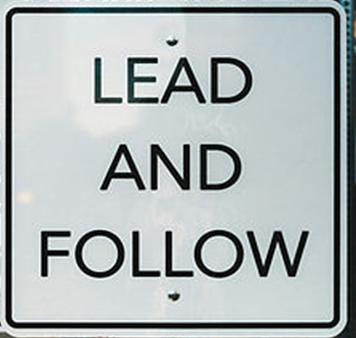
How to balance leading and backstopping roles in a co-facilitation approach
How? A tool kit of possibilities supports such an approach, ensuring you’re prepared with two main types of opportunities:
Options for work-arounds when an aspect of planning and support doesn’t materialize;
Alternative methods and techniques to rapidly accommodate a late start or a time over-run, or to respond to an obvious need for an engaging energizer before another presentation-heavy panel starts.
This post illustrates a range of ways that as a lead facilitator you can anticipate and be prepared to backstop your structured or formal team and the informal team that in the best of all possible worlds includes every participant. Collective work and a sense of having contributed positively to meaningful collective work is powerful, and a main reason a facilitator pays rigorous attention to participant engagement, interaction and participation.
Adjust your role, responsively and flexibly
Varying levels of experience and comfort with a facilitation role means sometimes you need to step in. But you have to find ways to do so that are collaborative and supportive, not butt in and take over.
Co-facilitation and your backstopping role
Early in the process, advocate for a strong co-facilitation approach.
Build co-facilitation principles into the design and evolve your role. Through a three day event, you may have the lead role at the beginning and through the first day, but be able to reduce your direct role by sharing it with others on the team, resource people and participants.
Balance opportunities to take a co-lead facilitation role with provision of support for those who are interested. Even when you’re in the background, you haven’t disappeared; you’re supporting the foreground.
For sessions of the full group, invite co-facilitators to decide on their own roles, and align your role to what they choose. Some prefer to be in the background, some in the foreground.
Selection of a facilitator for a specific session may be based on strategic reasons: who is known to need to have air time? who likes to show a big presence at the beginning and then leave? Ensure people with mixed agendas or reasons for being in a facilitator role are also backstopped by yourself and the team, including helping them meet process standards.
Whichever roles you end up in throughout a process, emphasize in your approach and recognition that it is as a representative of a full team, all members of which are contributing and also contact points for participants on anything they need.
When a co-facilitator is leading a process, stay physically close and within eye contact. Let the person know that they can call on you at any time – to fill in some information, to remind them of a linkage point, bridge a gap.
Follow the process closely, always. Attention, engagement, energy levels, focus – is it sustained or flagging? When an opportunity presents, suggest a way to address what you notice, e.g.: take a break 10 minutes early so people can both get a refreshment and continue to discuss the topic during a break. Strategize with the co-facilitator during the break how to get high energy and engagement back.
Where you have scope, either informally or formally, reinforce and build consistent facilitation capacity of your cofacilitators. Formally can include workshops and coaching.
Example: in one global conference, an executive producer and I were lead co-facilitators. We invited the people in the unit organizing the event to self-identify interest in cofacilitating parallel sessions, as part of finalizing design. Then we provided two capacity building workshops on facilitation specific to the particular event. Eighty percent of the team took on a co-facilitation role in leading break-out groups. Evaluations across the 140 people attending rated the event excellent.
Positive outcomes were consistent focus, standard approach to co-facilitation of break-out groups, and a capable aligned group distributed through table groups who were able to support and manage the plenary processes as part of it. Through the preparations and the event itself, as lead co-facilitators we gave feedback as well as recognition to all the co-facilitators and made sure we were available throughout for quick questions or problem-solving. We were hardly needed, but the confidence of less experience people was bolstered by knowing they could call on us if they chose.
Lead roles that typically remain with you as a lead facilitator or co-facilitator
The facilitator’s role many people remember is that of the process cop and the time cop. Either because when needed the person does the job well, or because they don’t. Keeping time and addressing disruptive or problematic behaviour are two key parts of your role that are required by you whether you’re backstopping or in a lead moderator or facilitator role.

Process cop
As a lead facilitator or co-facilitator, and often particularly as an external facilitator, your role as a “process cop” needs to be carefully calibrated and always at the ready.
Keeping time is one critical role, and involves so much more than watching a clock or setting a timer.
From the design stage, when your inputs need to ensure design is aligned to both purpose and time available, to facilitation in the moment, you have your eyes on time as both a potential and a limiting factor.
In action, when required, you need to be the face of the clock, a time cop, on behalf of the overall process. “Start as you mean to go on”: don’t hesitate at the beginning while the group warms up. Set and model clear standards of process management. (See the INSIGHTS page at facilitateit.ca for a post on time management that includes tips and tools.)
Dealing with disruptive behaviour particularly from members of the organizing group or the facilitation team is a tough role that you move in and out of quickly, applying immediate and direct action as needed and otherwise trusting the mechanisms put in place such as process norms, distributed facilitation team members and a relevant design that responds to participants’ priorities.
Once process norms are introduced and agreed, track participant adherence to them. Use your judgement. A short lapse, without big disruptions, can be let go. As soon as behavior is obviously disturbing or disrupting, pause the process. Examples of what quick interventions you can make include:
Use time effectively – pausing a process gets people’s attention until the ones to whom it is directed notice and also pause
Respectfully remind people of the norms and their importance
Ask a person who won’t stop a private conversation if they have something they’d like to share with the group
Briefly advise the group that you’ll wait to resume when the late and interruptive people are seated
You won’t have to make more than several interventions along these lines to set clear expectations and demonstrate standards expected within the process norms.
Some less experienced facilitators may be cautious about doing this, from shyness or concern about it appearing to be disrespectful. From experience, a majority of people appreciate a clear, well-managed process and value measures taken by facilitators to that end. In free-form evaluation feedback sections where participants can share whatever they want, a recurring theme noted over four decades is reference to the time and whether the event was worth the time. You want the answer to be a clear yes. Good time management will help you get there.

As a lead facilitator, your backstopping may mean doing jobs you wish others would do
Each event and process is unique. You need to be present before and after other facilitation team members and participants, so you have enough time to be responsive to presenting needs. The variety of possibilities is wide.
Below are common categories where backstopping is often needed, with examples drawn from real events. Consider this a field guide to the rare species of facilitation challenge — the unexpected ones for which no-one plans.
Room set-up
If enough people aren’t available to ensure timely room set-up and preparations, you may need to plan to show up an hour before the start-time and be ready to help. Chairs may be missing, and you’ll have to find replacements. You need to check room cleaning and get it done if it hasn't been, replacing water if provided and refreshing supplies at tables. Furniture may have been moved or moved out, if the room was used for another activity" you’ll have to ensure it’s rapidly re-established for your event.
Example: An annual 3-day symposium for 120 people was held at a conference facility. People attended from the host city and many other countries. Without notifying us, the conference facility used the main conference room for a different event on the second night, and unknown to us, did not reset the furniture for our event. The conference facility staff did not start their work day until the same time as our event began and did not show up until 10 or so minutes before. Our conference coordinator was slow to respond to our calls and unable to get the operations team to the venue in time to arrange the room. The facilitation team pivoted. We located the storage area for main tables, and arranged the tables and chairs ourselves. We worked fast. Sweaty and disgruntled, we were able to wipe off the sweat and paste smiles on to start on time. Once the day was underway, and the first session running smoothly, we got our morning coffee. Necessities first!
Seating arrangements
Seating arrangements may not have been updated, requiring seating adjustments and table tent card / name plate rearrangement before people start arriving. For some events, a reserved section is protected for a particular group of attendees or resource people. People like to distribute themselves rather than sit down right beside people they don’t know. Make sure reserved seats are clearly marked before people come in the room.
Keeping a facilitation or co-facilitation team together has advantages and disadvantages. Advantages include people can work on event-related functions without interrupting others. Disadvantages include potential distraction and distancing of the facilitation team from the participant group. Distributing facilitation team members throughout a room as strong internal process management support is a recommended good practice, in general. If some people must do other work, to take care of event related logistics or arrangements, for example, consider: a) a separate secretariat; b) all such work be requested taken out of the room.
Signage
Signs directing people to specific locations may not be posted early enough, or may be inaccurate. Make sure clear directions are in place. Where you have to, write up your own directional signs on chart paper and put them where participants will need to see them. If electronic signs are the norm, check the night before that updates are ready.
Have the name of the person responsible for this or the conference site coordinator and contact them about needs for signage changes early enough for the signs to be in place to guide participants.
Group memory and materials
Fallen graphics from interactive exercises
Sticky notes may fall off wall on graphics generated one day and remaining posted as a group memory for subsequent days. These will need to be rapidly reconstructed. The advantage of keeping substantive "wall graphic" records of proceedings is that it serves as a "group memory" for subsequent work, can be referred to by anyone in later discussions. As part the facilitation safety net, you need to either bring or know where to get tape quickly, and at least several people to informally draw on the complete the repairs.
Example: Many interactive and participatory methods can bring collective profiles to life with sticky notes. Colour coding can give depth to the profiles. In the same conference as the example above, different colours of sticky notes were used to identify responses to a set of questions posted in a “gallery” format around the walls of the venue. The exercise was so rich, brief report-backs could not be comprehensive. We encouraged people to take time to read the profiles in depth over the next days, confirmed we would keep them posted as part of the event wallpaper for regular reference.
But when I arrived an hour early the next day, the floor before every profile was littered with coloured sticky notes that had fallen. It took time and team effort to figure out where in the profile the fallen notes belonged (and in the end we weren’t sure we replaced them accurately). Then we taped the sticky notes onto the chart paper, those that had fallen and those waiting to fall. Tip: the quality of sticky notes can vary widely in different places and conditions: include several types of tape in your facilitation tool kit if you travel. (Along with a few large-nibbed markers with dark ink.)
Taking a photo will ensure a record but it doesn’t take the place of having a “group memory” — graphics that reflect collective work and progress.
Supplies
Supplies at tables may not have been tidied up or replenished. In a rented venue, staff may clean up tables but they will rarely touch or move materials or papers. That can result in a mess of left handouts, for example, or notes on scrap paper. Someone who knows the process needs to quickly tidy, placing left materials in a place where people who want them can find them.
In some rented venues, clean up is the responsibility of the group using the space. Plan for the specifics of each situation so you aren’t the one left cleaning up at the end or beginning of each day – get a volunteer team to work with you.
Example: In a strategic retreat of 40 people in a rented conference space, we neglected to include in the process norms that we were responsible for keeping the space clean and a request that people clean up after themselves. At the end of the first day, when participants had left, we realized we were the ones who would have to clean up. In the opening session of the second day, we explained the situation and adjusted the process norms. People willingly cleaned up, their own and others’ garbage.
Technology and atmosphere, the feel of the room
Music for energy and ambience
Having powerful music to liven up the atmosphere in a room can be part of creating dynamic energy.
Aim for a diverse playlist as related as possible to the group, or curated by them.
Arrive early enough to ensure that lights and music are on at least 20-30 minutes before start time – some people always arrive early and you want the room welcoming for them.
If music leads tend to arrive at the last minute, make sure your technical check includes instructions for you to be able to manage this.
If a play list is created by and for the group, ensure the lead on the team has access to it.
Example: For an event of 90 people, we had confirmed with the hotel that the technical team managing A/V would ensure music was playing for 30 minutes before start-time, as people arrived, during breaks starting immediately and continuing until the sessions resumed, and at the end of the day as part of a less formal closing tone. Participants contributed to a playlist that was kept “live” with a dedicated channel for recommending types of music or songs. But the technical team thought their role re: music was to connect to a radio station and have it broadcasting. A tech-savvy member of the facilitation team recreated the playlist on her phone and attached it to the sound system, had it playing a half hour before start-time and trained the technical team on using it as we had planned.
Technical team
If the technical team is weak or unpredictable in when they show up — both of which can happen — you have to make sure you have built in a strong enough technical briefing that you or another member of the team can step in to start on time. Another back-up is to have an alternative activity ready to immediately introduce if and when the technology fails.
Nothing drains energy faster than watching a video fail to load three times in a row. If this happens, pivot immediately. Invite people to take five minutes to reflect and discuss the highlights of the previous session or proceedings to that point, while technical problems are addressed. Don’t just let the air get heavier and watch people reach for their phones.
Be ready with a “time filler” that has meaning for the process and isn’t a waste of people’s time. For example, strong agendas have themes for each day or half-day, aligned to objectives. Have several guiding questions ready that invite people to reflect on their experience with the theme, identify a good practice or a challenge from their experience. Depending on the set-up, ask people to:
share these in pairs or groups of 3. If the group is restless with energy to burn, consider making this a “walking conversation”, where people get up and go for a 5-10 minute walk around the room, the building, a garden. Make the most of pleasant weather and the outdoor space available at a venue.
share the reflections in table groups, with the additional task of establishing the patterns that emerge in the table group exchange.
These quick activities prime people for the day or the session. Instead of feeling they are ‘starting late’, they feel they have already engaged with the substance in relation to themselves.
People and comfort
Room temperature
Room temperature may be too hot or too cold: try to have it adjusted for comfort when people arrive. Most rooms warm up as they fill with people so a comfortable temperature to start may not remain comfortable.
If temperatures fluctuate and you notice people putting on sweaters or taking off jackets, ask someone on the facilitation team or one of the participants to be a point person on room temperature, so you know it’s on someone’s radar and being monitored.
In briefing with the operations or technical people at the venue, confirm the heat/cooling control mechanisms, who has access to them, and who has to be contacted for changes.

Water
People in meetings and events need ready access to water. Water may be made available in pitchers or in bottles. Choose pitchers where possible to minimize ecological impact.
Pitchers or bottles of water may not be distributed to tables early enough, which may lead to a disruptive start to a session. You do not want carts clanking around with water pitchers as people arrive or a session starts. If water is being provided, go to the venue early enough that you can check it has been distributed with enough time to get someone to do it — or do it yourself — if not. Confirm with the event coordinator on site the time that water needs to be available, half an hour before start-time.
A missing or late resource person
If a key panel member or resource person isn’t in place when a session starts, don’t make people wait. Be prepared with a summary of highlights so far, for example, or a brief context background on the theme of the session, or the reflection activities noted above.
Work closely with a session moderator so the process is seamless, supporting that person to smoothly transition into the planned session when resource people are in place and ready.
In closing: the joy of distributed facilitation
High situational awareness keeps you from being process blind — and protects the strong relationship between purpose and process.
So many factors can influence how smoothly a process flows and how participants feel about it. Backstopping calls for eyes from the macro to the granular; from 40,000 feet to ground level; from the balcony to the dance floor. And every process can be elevated through openness to co-facilitation as a collective and collaborative opportunity.
Co-creation is a leadership practice. Co-facilitation is a process leadership practice. A strong design lets you relax into an open approach to co-facilitation. Providing opportunities as well as the option of capacity supports increases engagement and the value participants gain from an experience.
When you backstop a process well—when you've built the team, extended it to capable participants, and positioned yourself to catch what falls—something shifts. Instead of feeling harried or burdened by every aspect of facilitation, you become a connection point for many different contributions, fitting them into the bigger picture in ways that amplify the quality of the parts and the sum.
Positive energy sizzles. Quick, succinct steps add up to a picture to which everyone involved appropriately feels they have contributed and in which they are invested going forward. You'll have advocates and champions, not just event-specific participants.
Plus—and this matters more than it might sound—you'll have a lot more fun.
When the work is distributed, when the team is capable, when participants are co-creating the process from within, you get to experience the collective lift alongside everyone else. The feeling of successful achievement is a shared one, providing an energy that buoys up everyone involved and helps sustain the motivation to transfer agreements forward into action and results.
It gives you all more to celebrate!
We hope you've enjoyed this series and its exploration of using co-facilitation to reinforce an aristocracy of the capable when it comes to facilitation. Please visit the FacilitateIt.ca website, INSIGHTS page for more posts.